Opinion piece for Building Design from the Venice Architecture Biennale preview, May 2025. [Read in full here.]
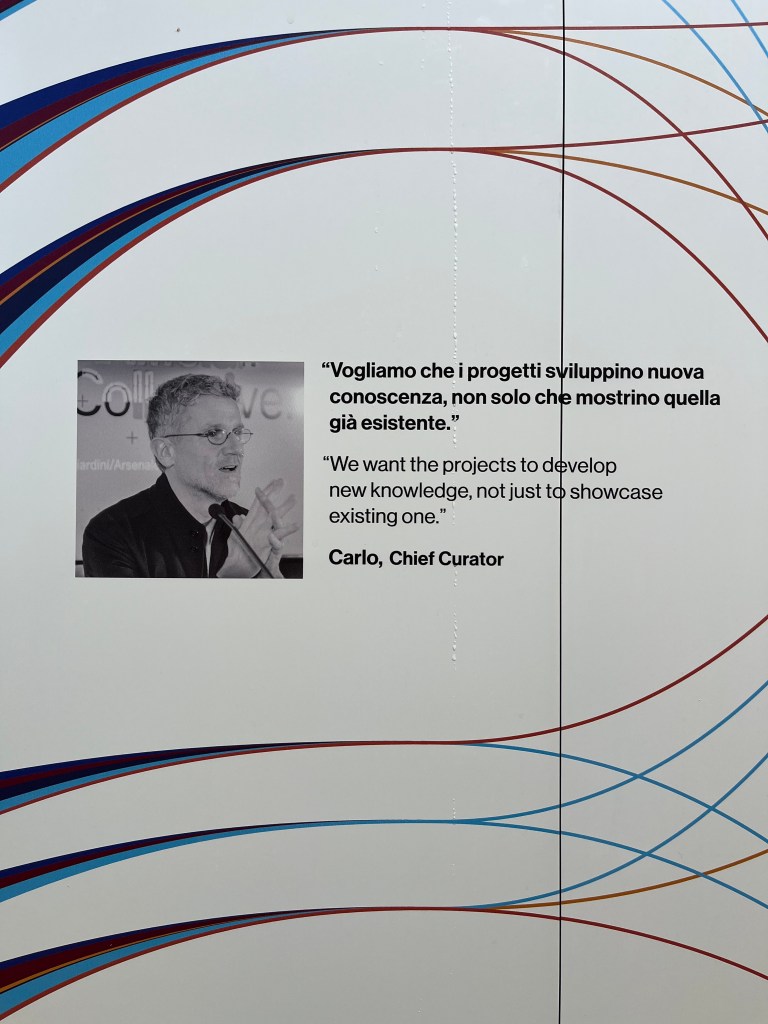
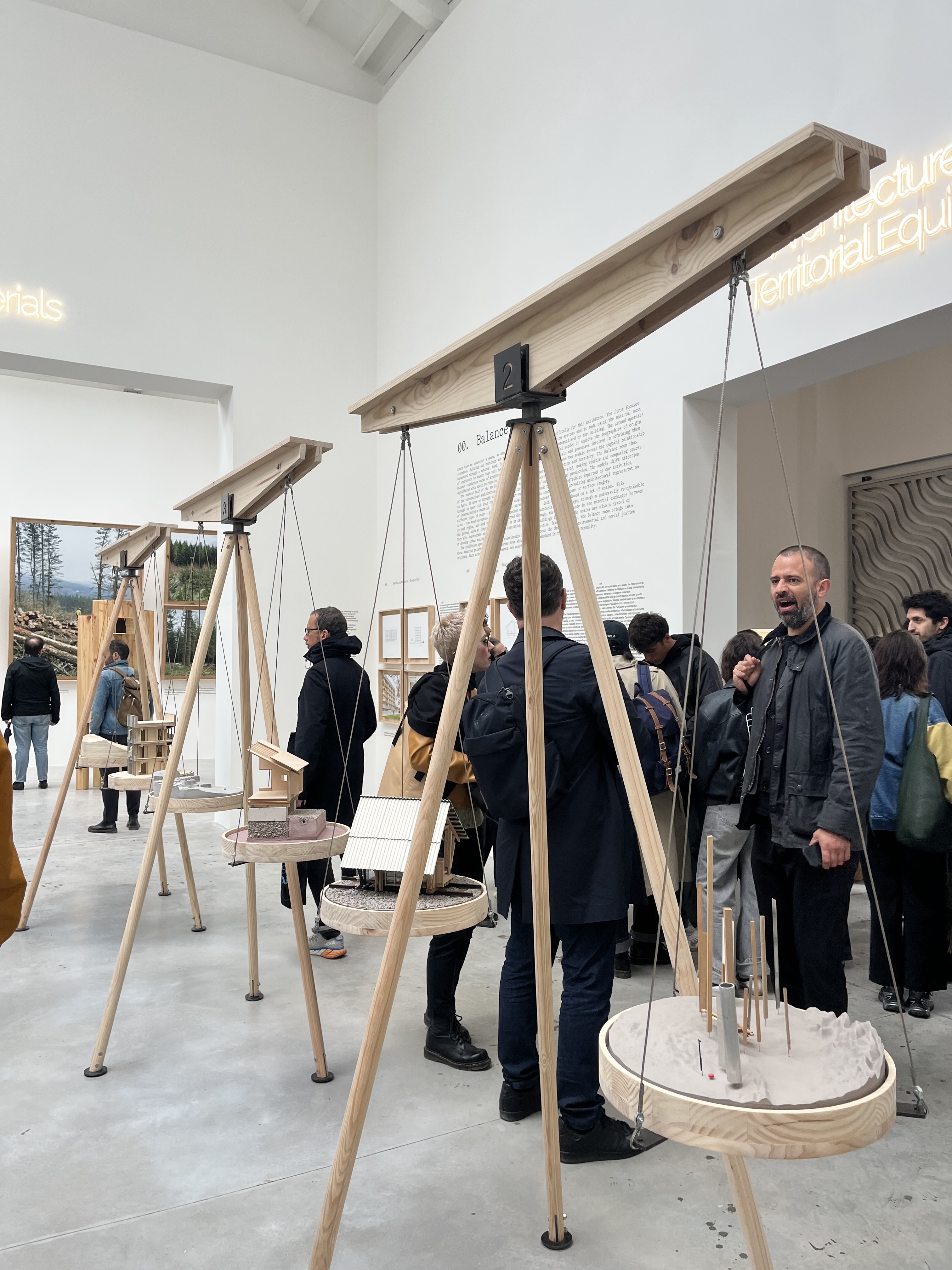
There’s an indecipherable network diagram across a long wall in the Giardini that tries to explain the organisation of the 2025 Venice Architecture Biennale. It charts the connections between the thousands of people involved. Caught in the middle of its web is chief curator, Carlo Ratti, and his quote: “We want the projects to develop new knowledge, not just to showcase existing one.”
Ratti has been described as a polymath – preferable to claiming that title yourself. For the Biennale, he has drawn on his roles as architect, engineer, MIT professor and author to challenge the idea of the lone genius; to propose “a more inclusive authorship model, inspired by scientific research.” His title, splashed all over the city on vaporetti and posters, is the much-memed ‘Intelligens. Natural. Artificial. Collective.’ Getting through the next few days will take all three. It’s impossible to cover everything, but here’s what stood out.

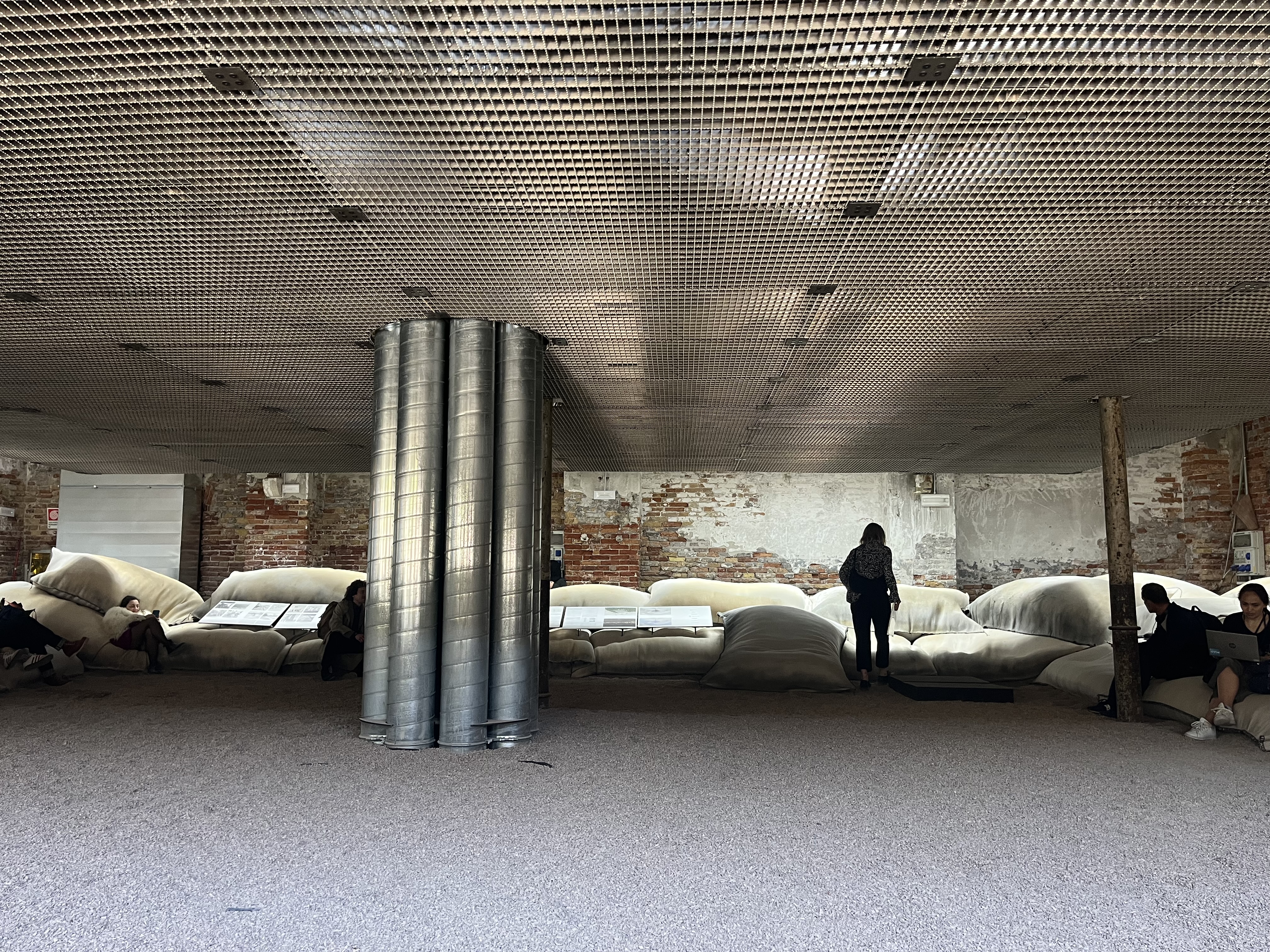

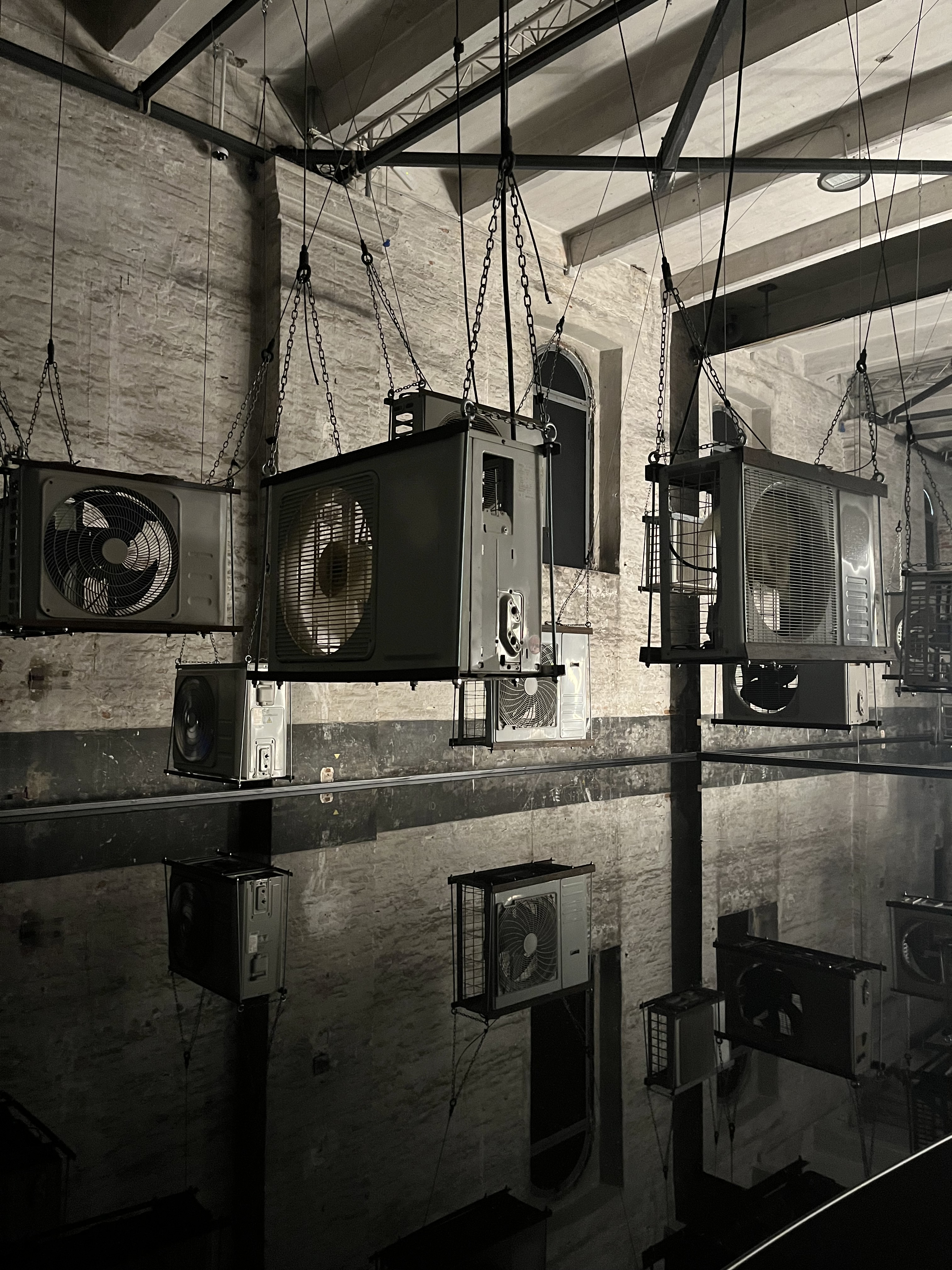



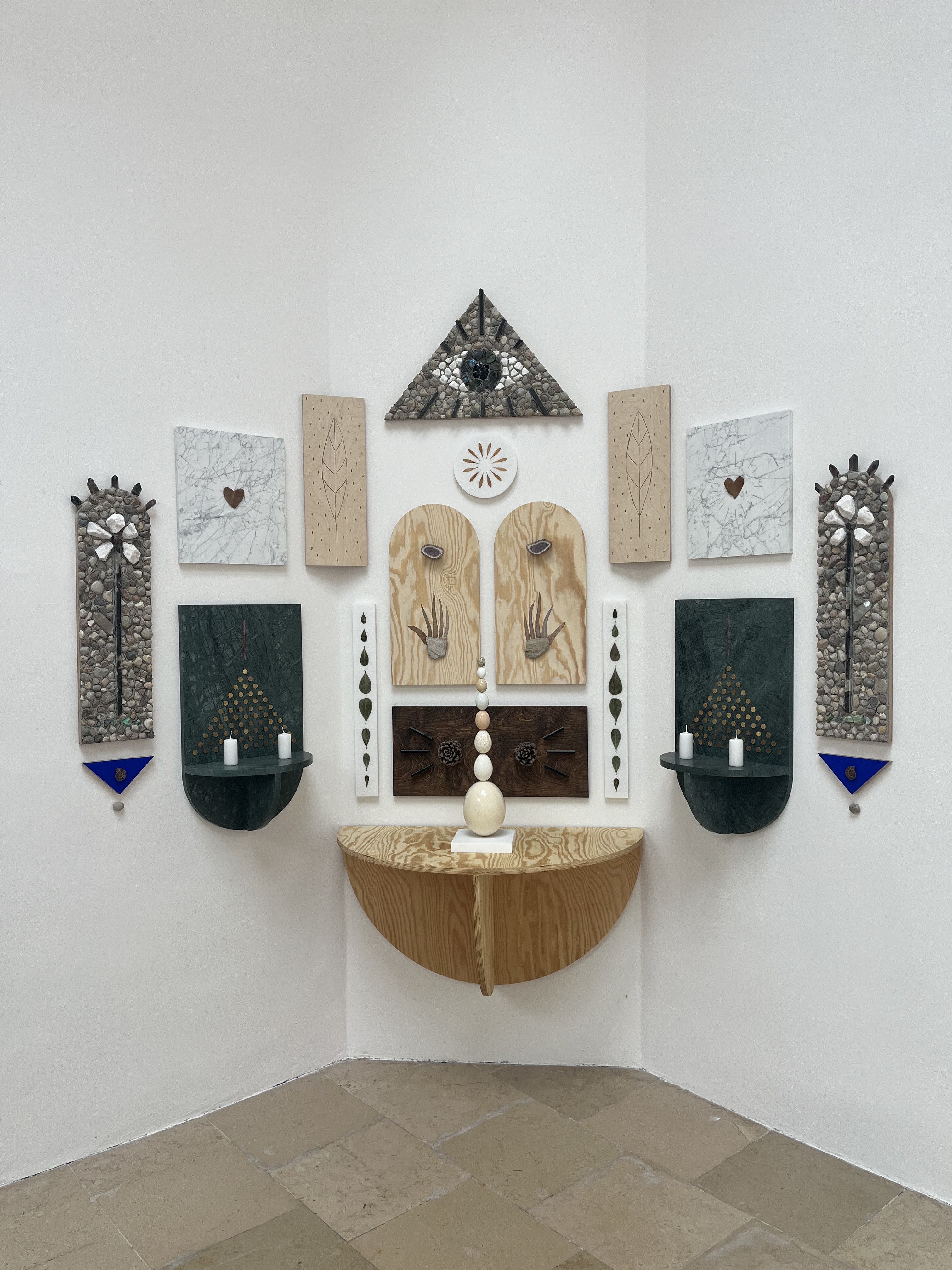
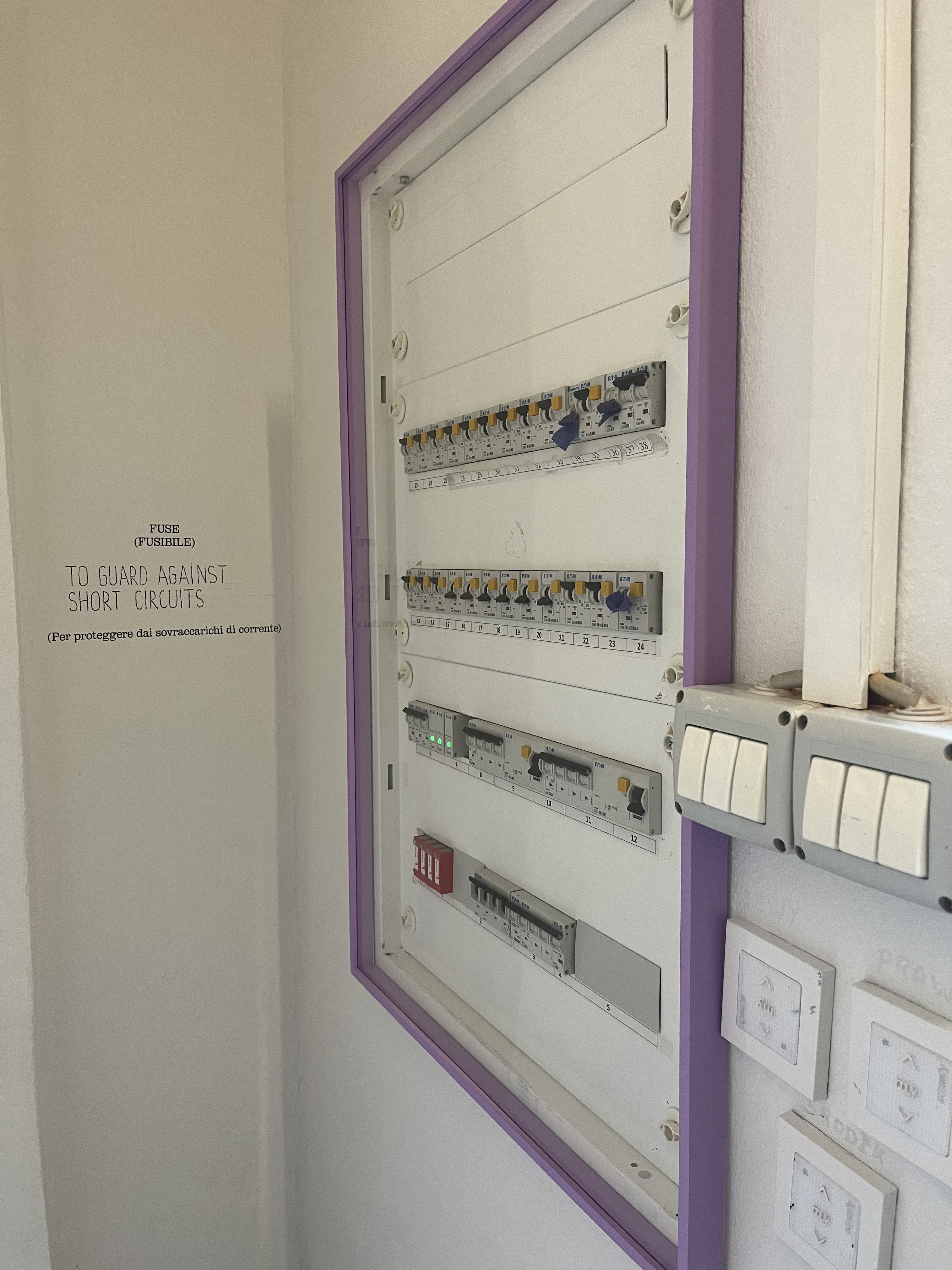
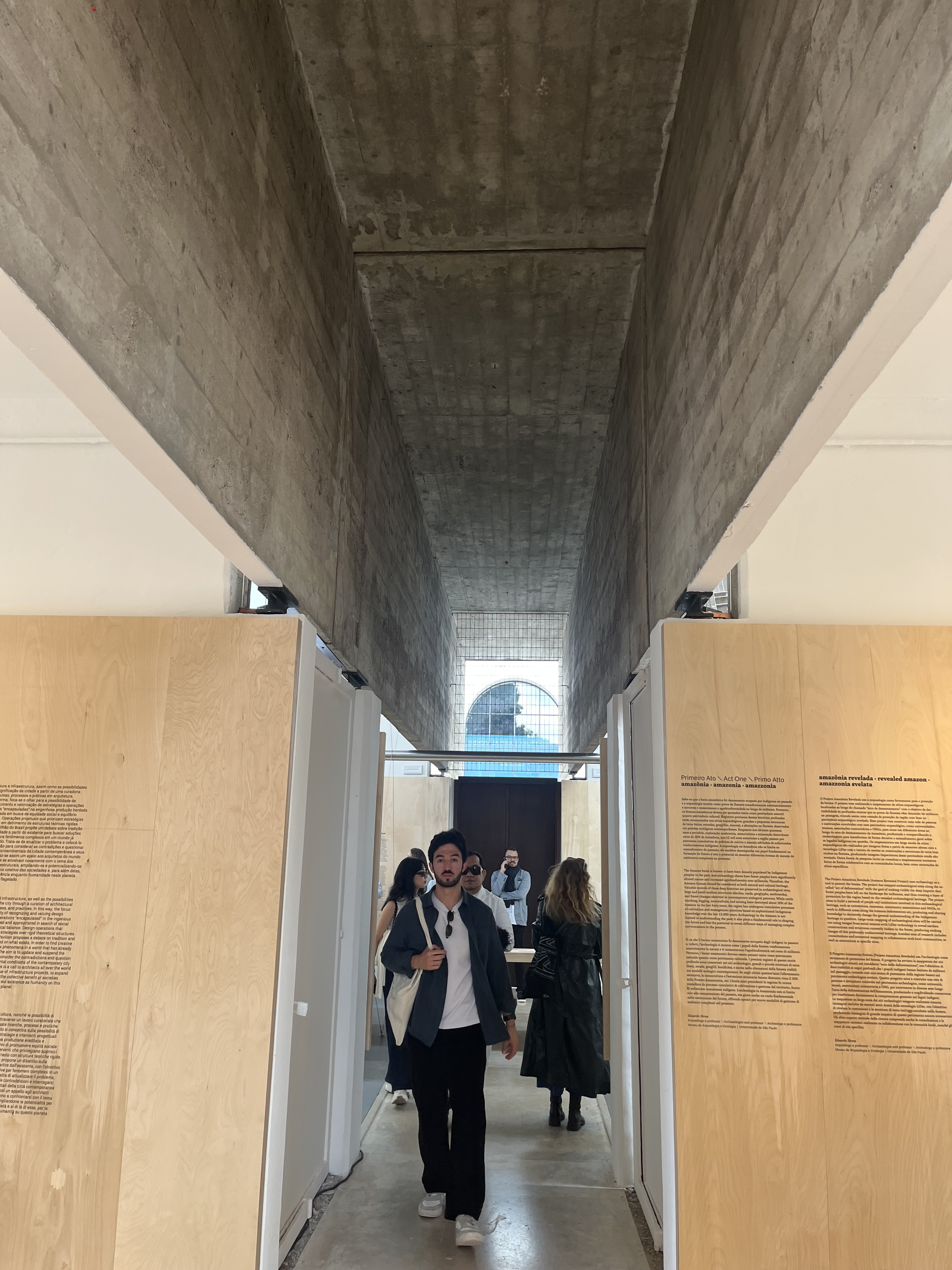


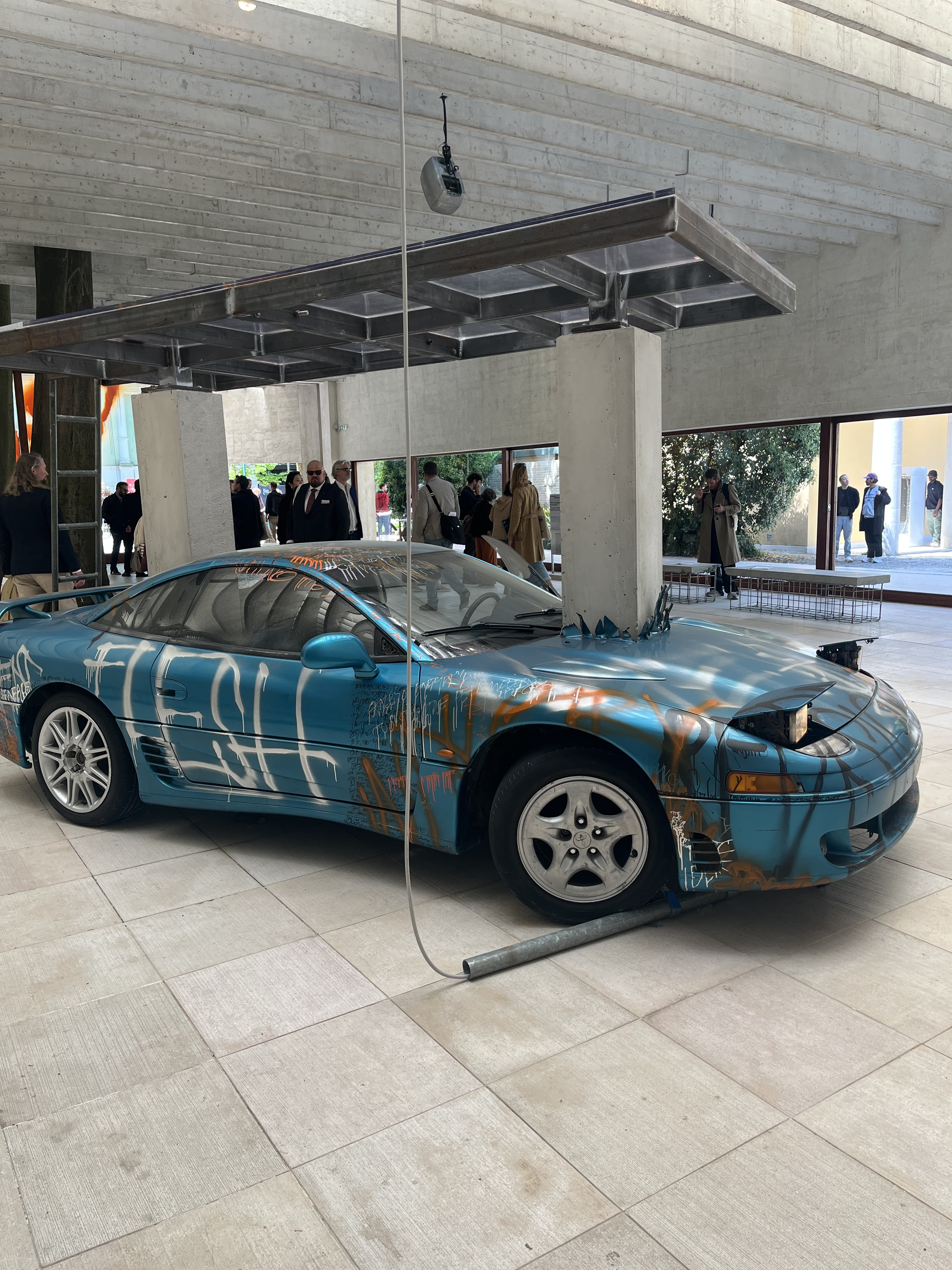


Kingdom of Bahrain, 8 points; Finland, 10 points
First, to the Giardini, where it’s hard not to be seduced by its permanent pavilions, sometimes at the expense of the exhibitions. I didn’t register why a car was impaled Cronenberg-style on concrete posts in Sverre Fehn’s Modernist slab of a Nordic pavilion, I was too busy looking at the roof.
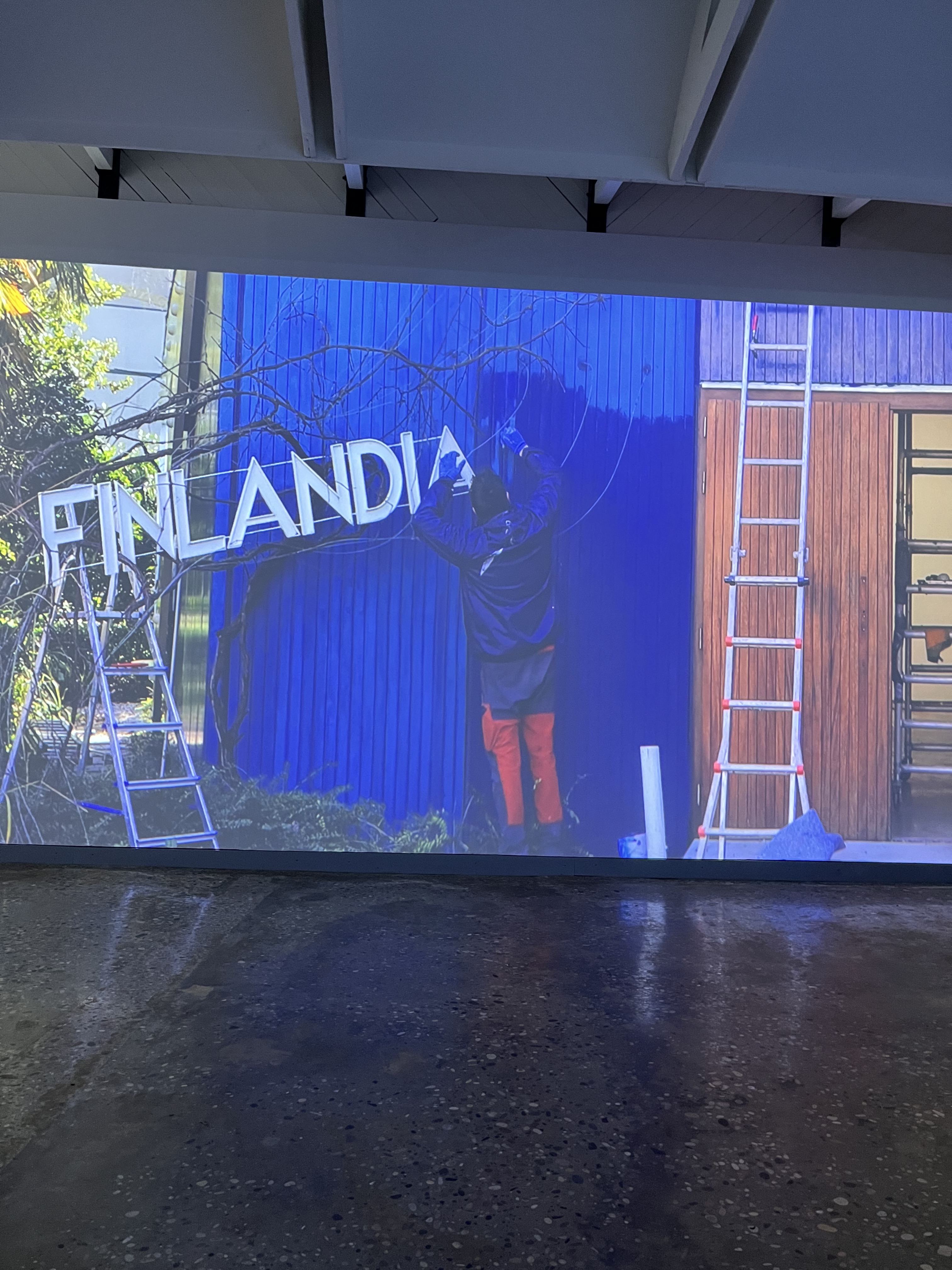
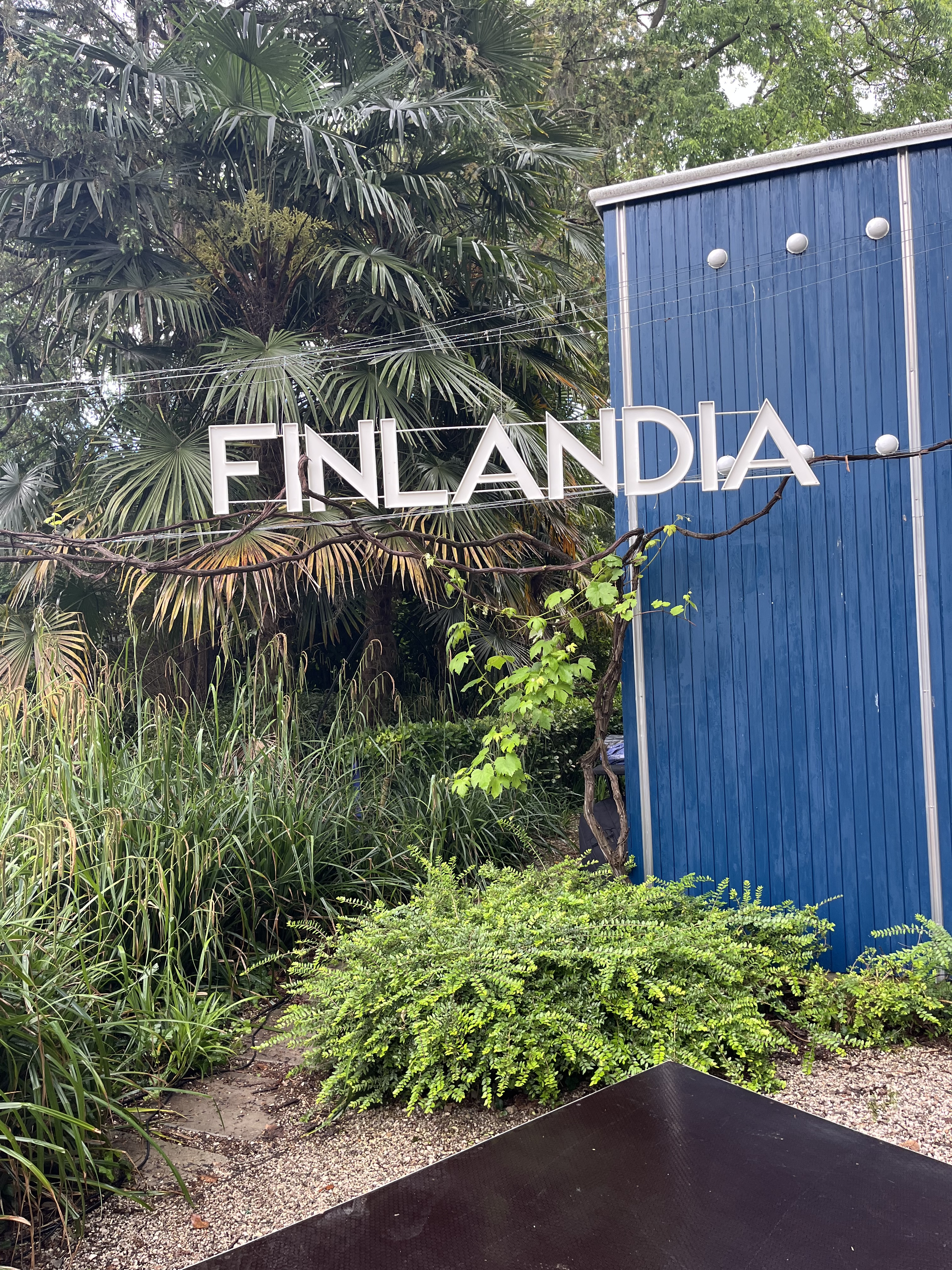
Finland’s atmospheric blue and white pavilion, built in 1956, is another beauty, but Alvar Aalto’s choice of wood for its construction has proved ill-suited to Venice’s humid lagoon climate. It survives through care. The exhibition takes this stewardship as its theme, projecting films that highlight the contribution of caretakers and maintenance workers to the making of architecture.
In the nearby Belgian pavilion, next to a biosphere of more than 200 plants, I find myself standing before a glass-fronted cabinet of flashing lights and circuitry. The presence of wires and so on tells me that this is technology, that the plants are doing something, and that something is being monitored. I’m aware that I’m observing knowledge. Perhaps, as Ratti hopes, I’m even watching the emergence of a new understanding of plants’ ability to moderate the indoor climate, but my participation is limited to enjoying a bit of a rest in its greenhouse.
Some of the more low-tech pavilions make an ecological point well for the less technically minded, like Lebanon, for example, upstairs in the Arsenale, by Collective for Architecture Lebanon. In The Land Remembers, wheat seed is cultivated in earth bricks to highlight how the rare biodiversity of Lebanon is under threat from conflict and climate change. Bahrain’s also feels useful and direct – a shelter for construction workers in a heatwave, a worthy winner of the Golden Lion.
Poland, 12 points
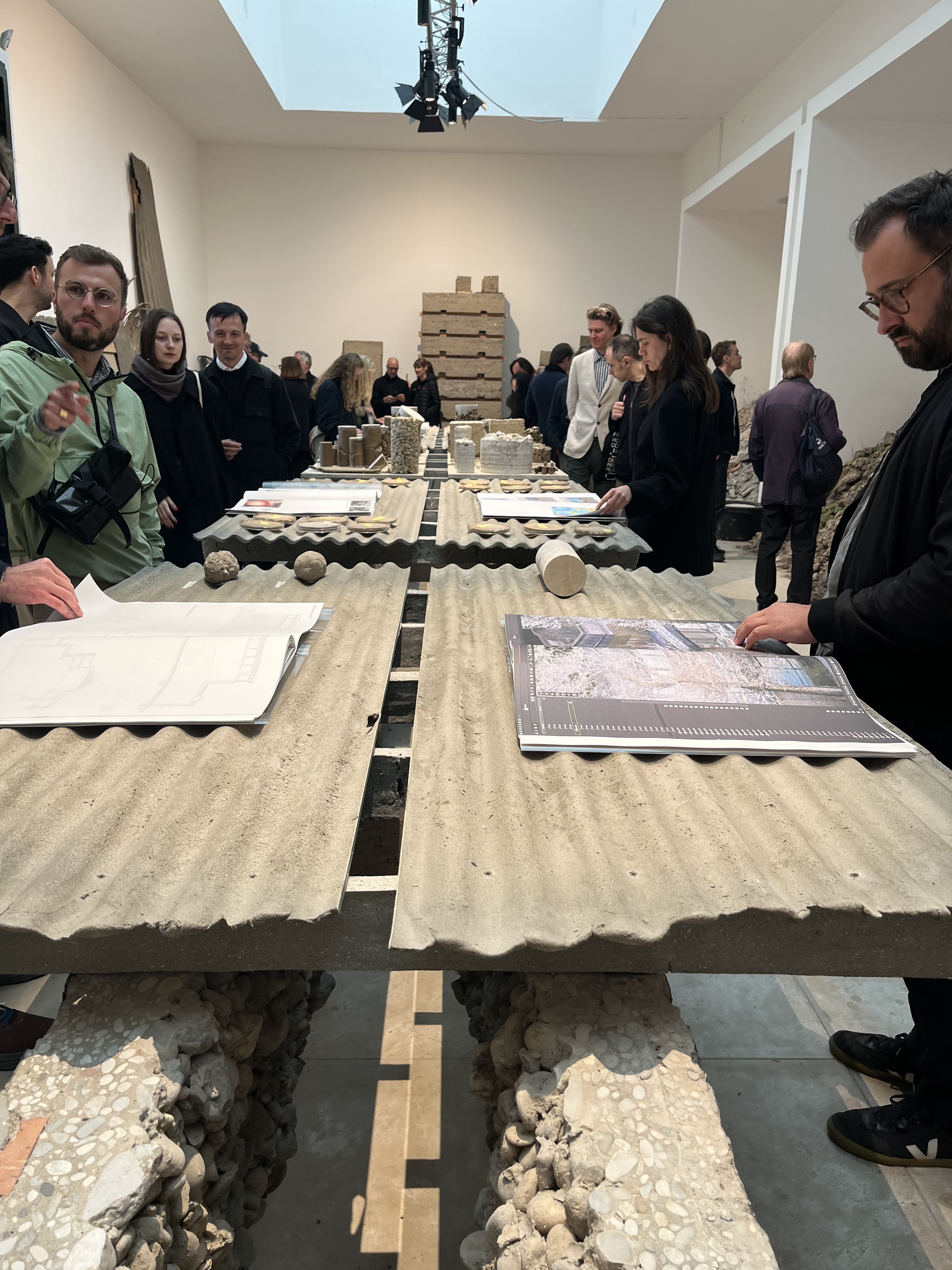
To engage meaningfully with the biennale is to lurch from climate catastrophe to conflict to AI-driven futures, with a lot of soil and broken stone in between. It’s overwhelming. But some installations offer moments of clarity and humour. My personal favourite was Poland’s Lares and Penates, which explored rituals and beliefs. A smudge stick of sage to dispel bad energy was displayed with a fire extinguisher, each presented with equal status as a household deity. The wall was labelled a threshold “to separate the safe space from the unsafe area,” translating global anxieties into domestic symbolism. Conceptually clear and fun.
The Estonian pavilion, a corner building on the approach to the Giardini that has been partially clad in big white insulation panels, was also popular. So was Yasmeen Lari’s Community Centre, a temporary bamboo structure on the site of Qatar’s future pavilion. I had the chance to meet Lari, Pakistan’s first female architect, and we talked about the usefulness of hollow bamboo to channel cabling…
Read the full piece in Building Design: https://www.bdonline.co.uk/opinion/at-venice-2025-the-architecture-biennale-trades-star-power-for-shared-ground/5135947.article
 Editorial Content